Rutgers logo
Rutgers Equity Alliance for Community Health
Rutgers logo
Rutgers Equity Alliance for Community Health

Population Health

Stories

Image of the REACH Team featuring eight employees sitting and standing near a bench on Rutgers campus

Rutgers is launching a new initiative to improve the health and quality of life in economically disadvantaged communities dealing with food insecurity, high unemployment, low high school graduation rates and shrinking household income – funded through a $10 million grant from the Robert Wood Johnson Foundation (RWJF).

The four-year grant, part of a larger presidential and universitywide commitment supporting health equity, will create the Rutgers Equity Alliance for Community Health (REACH), joining community-based organizations with university researchers, teachers and students. Participants will come together to find ways to improve health outcomes by focusing on social determinants of health and working where people are born, live, learn, work, play, worship and age. 

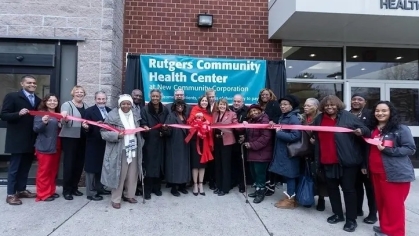
Image of twenty people standing behind a red ribbon for the Rutgers Community Health Center

Rutgers faculty, students and staff are taking measurable actions to address social, economic and racial inequities by partnering with local organizations that work with marginalized populations.

Denise Rodgers, vice chancellor for interprofessional programs at Rutgers, heads the Rutgers Equity Alliance for Community Health (REACH), a $10 million initiative to address social determinants of health in three New Jersey cities: Camden, Newark and New Brunswick. REACH’s goal is to focus Rutgers’ resources in addressing nonmedical factors that influence health outcomes, including schooling, employment and food security.